http://climateaction.re.kr/index.php?document_srl=3207&mid=news01
Today, the power of money overwhelms other sources of authority. Although it's time to change the energy sources, oil companies try to refuse to be changed. They are worried that they would become 'dead big dinosaurs' as railroad companies were. However, I believe new ages are coming again, and to meet this age, change is inevitable.
2013년 1월 13일 일요일

2012년 12월 7일 금요일
Minjok: origin, historical meaning, and the future
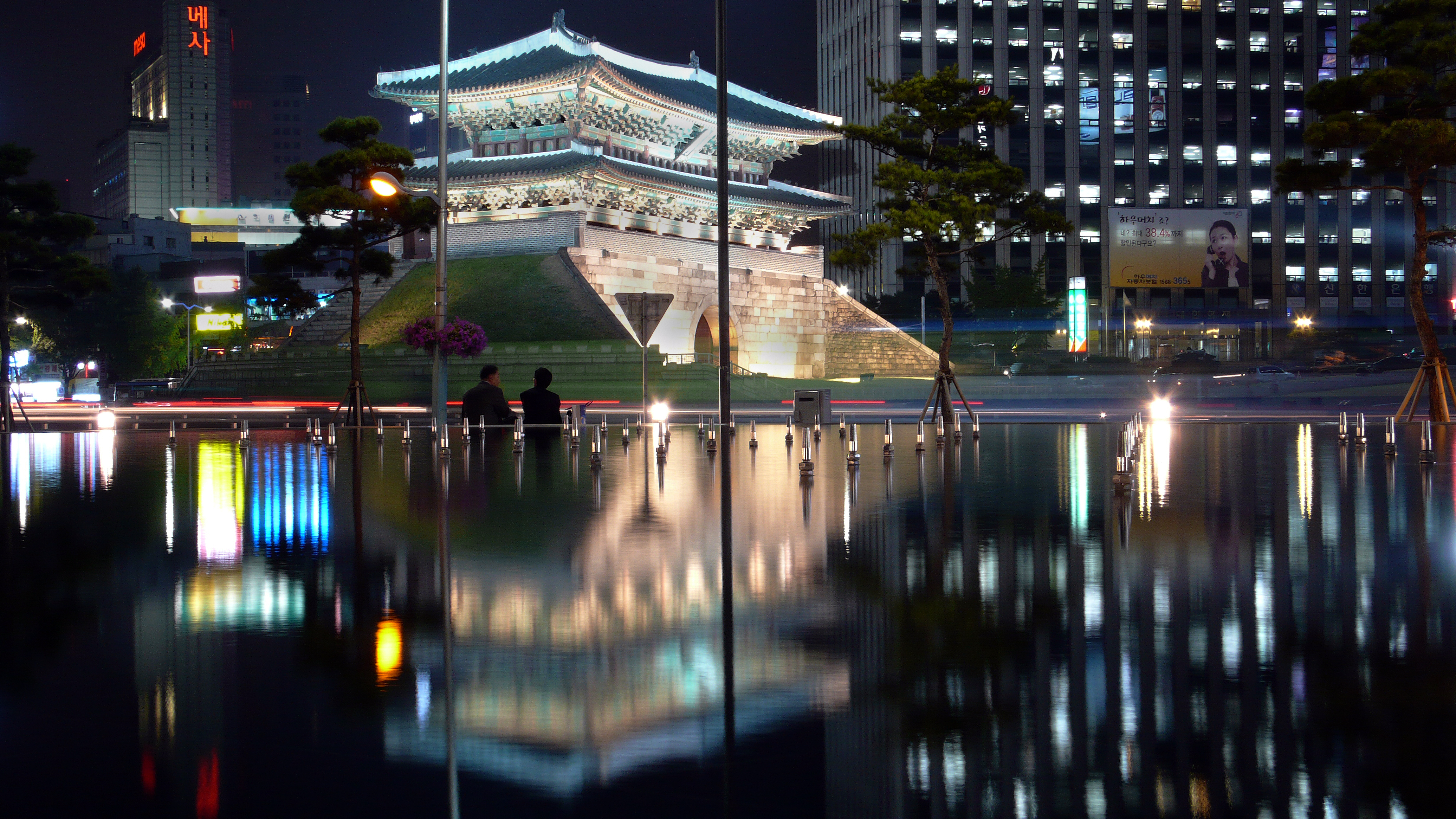 The word ‘Minjok’ is translated into various English words: ‘nation’, ‘ethnic’, ‘bloodline’,etc. However, none of this is appropriate translation. It derives from Japanese word ‘minzoku’ at first, but developed as an own concept of Korean. It’s hard to define ‘Minjok’ clearly and simply. However, if people who share common cultural elements and historical memory feel unity with each other, these people are usually called Minjok. (Definitionfrom naver) Koreans pay much attention to ‘pure bloodline’. Many textbooks state that Korean preserve the purity of the nation’s bloodlines for 5000 years. (Kyǒnghyang sinmun, 15 September 1996) They feel bonding more with oversea Korean bloods rather than mixed-blood legal Korean.
Although, many Koreans believe the concept ‘Minjok’exists from very old, it actually appears in early 20th century. At that period, Chosun dynasty had a great difficulty against imperialist countries and western cultures. Japan was also highly influential country at the time, which finally merged Chosun in 1910. Many Japanese scholars and some Korean scholars insisted ‘Pan-Asianism’,claim that since a number of Asian ethnics had similar characteristics, they should collaborate not to be colonized by west and construct Asia for Asian. Japan even had a plan called ‘Greater East Asia Co-Prosperity Sphere’. Korean nationalist scholars strongly criticized ‘Pan-Asianism’ along with it. Although they both agreed that threat from western countries was intimidating, Korean nationalist scholars also perceived the threat from other countries in Asia. Many prominent scholars such as Yi Kwang-Su and Shin Chae-Ho emphasized the difference between Korean and Japanese, and tried hard to establish Koreans’own identity.
The word ‘minjok’appeared in this period by Korean nationalism scholars. They tried to lead the solidarity of all Korean, and implant the importance of Minjok and independence. There were many arguments around the concept of Minjok, which eventually focus on bloodline. Also, the Korean nationalist scholars argued with other scholars who claimed the broader collaboration such as communist. Minjok concept became acknowledged in the competition with other ideologies.(Ethnic Nationalism in Korea, Shin, 2006)
The Minjok concept became firmer after independence. The first president Lee Seung Man formally suggested sole-nationalism. This idea also supports anti-communism. The first Minister of education Ahn Ho Sang also adopted ‘Hong ik in gan’, the key idea of Dangun, as one of major educational philosophies of Korean education. President Park Jung hee also paid emphasis on Minjok ideology during his modernizing project. He made plans to raise Korea’s economy, called ‘fatherland modernization’. He used Minjok ideology to justify this plans and dictatorship. He mixed Minjok ideology and anti-communism effectively and succeed justifying his dictatorship. As a result, the Minjok concept became stronger in Korean’s mind as time passes by.
Minjok concept has played several main roles in 20th century history. As written above, the concept has tremendously contributed the modernization of Korea by leading people to work with responsibility and by justifying Park Jung hee administration. It was also used during Japanese-colonization-period to strength Korean’s unity, fight against Japan, and get independence.
Moreover, it has been used for unification ideology. Both North Korea and South Korea shares similar Minjok identity. They both believe Korean’s bloodline is purely preserved for about 5000 years, and assume that all Koreans are descendent of Dangun. However, they both do not appreciate the other’s legitimacy. South Korea spreads anti-communism, while North Korea spreads anti-colonialism, criticizing the South as a puppet of United States. They both think division of Korea is awkward and unnatural, believing Korea should reunify again. In spite of their difference in ideology, still several scholars and many people believe the potential power of the same bloodline in future unification.
Minjok ideology helps Koreans recover their self-respect. The 20th century of Korea, started with continuation of tragedy, Korea became Japan’s colony for 36 years, and after independence, war and dictatorship followed. While these confusing period, Minjok ideology succeeded to bond Korean. Korean believed that their destiny are highly depends on Korea. They were required to sacrifice for their Minjok, and worked for them. As a result, they felt strong bond and self-respect about their country and history. After modernization, many Koreans learned ‘the miracle of Han river’, marvelous development of Korean economy as well. These factors allowed Koreans to be proud of their country despite their tragic recent history.
However, despite all these good results Minjok concept brought, it caused the poor development of modern ideologies. In the beginning of the Korea, the liberalism was often misunderstood as the opposite of Minjok ideology. Minjok ideology requires people to work for Minjok, rather than themselves. People who claimed other ideology were frequently suspected to deny Minjok. As a result, liberalism and conservatism have developed without enough constructive discussion. The poor basis of these ideologies turned out to be highly problematic in Korean politic and society. In fact, Minjok ideology hindered the other ideologies’ advancement more thoroughly in North Korea. The communism of North Korea wasn’t developed like other Soviet countries. The Minjok ideology and communism were mixed and gave birth to nationalistic communism. A lot of people who criticize nationalistic communism were purged, so this ideology was adopted without proper criticism.

Korea has been rapidly modernized for 50 years and globalized in recent years. However, this fact doesn’t get rid of Minjok ideology in people’s mind. The 2002 world cup proves this most directly. Numerous people wearing red cloth (it represents the Korean soccer team) came out to roads to watch soccer game and cheer. They cheered enthusiastically and when Korean team won, they shared joys together. There were few violence and disturbance. People cleaned the road by themselves after soccer game, and they tried not to make disordered atmosphere. According to survey, almost 90% of people felt unity, and 80% of people were proud of Korea.(현대 한국 민족주의의 전개 양상, 김수자)
2002 World cup was appreciated to show the new aspect of Korean Minjok ideology. It proves Korean can collaborate if a common goal was given. Also, it made the ideology more flexible to abroad. The exclusiveness became dimmer, and people treat foreigners with open minded. The open Minjok ideology can lead mature citizenship.
Minjok ideology has played many different roles in history. In 21st century Korea will become more globalized and multi-cultured. The exclusive Minjok ideology, which only seeks for pure bloodline, can bring discrimination and violence. In contrast, the open Minjok ideology can have potential power to accept all the difference of multi-cultured family. Korean often does not separate the concept of Minjok from country ‘Korea’. They would accept other race people and other cultured people living in Korea without big problems. The mass media and campaign should change people to open their mind wider. Toleration toward other cultures will be significant for unification, too. People living in North and South Korea formed a bit different culture. If people cannot tolerate each other’s difference, it would be hard to unify in practical. People would feel strange at first to the fact that people from western country and Southeast Asia would be Korean as well. People will get accustomed to this as time passes by, and they will be natural to hang around with them.
Video Response- the maker
 What do we pursue in our lives? Most people might confront this question at least once. Some philosophers-like people seek for the answer throughout their whole life. How do we answer this question tremendously affects our everyday life. If this perspective of values change, the life of us would change a lot as well. This video also reminds us the question once again. What do we live for?
After watching this video, I feel sadness because of 'death'. Most people instinctly try to avoid death and feel scary about it. However, nobody can completely avoid death. One day, we will disappear from this world, leaving many family, relatives, and friends. This video glorifies death. At the end of the video, the old maker turns into shining ashes, removes all his traces and vanishes. The video shows the virtue of leaving one. When people meet the destiny of leaving, it's beautiful to leave without struggling.
The maker makes human beings by reading a book and contributing his/her effort. Finally, the new maker open her eyes, and hug with the old one. However, the old one not only makes the new one, but also makes himself. By reading a book and contributing his effort, he develops himself. In the beginning, when the old maker was born, he looks curious like a infant. While making effort for others, he also slowly understand his life and destiny. This shows the process of understanding the value of our lives.
After the old maker disappears being an ash, the new one started to make another maker. In this part, many people might feel vain. Nothing leaves after he leaves. However, this video implies the reason why we live is to be a better human being. We slowly understand our destiny, our life, and how to live the rest of our life, and finally we leave this world for the next generation.
2012년 11월 26일 월요일
cemetery -- for the dead people
This is based on data that Sangwon, Ho jun, Jihyun, and I researched in Mr. tame's class.
The Cemeteries of London
London is a city renown for its underground. The world’s first subway
system, the ‘Tube’, the catacombes, War Bunkers, and the monuments and
cemeteries, are all sited as some of London’s most famous attractions. Among
these, we will take a look at the burial places of London, in general.
I. Where
were People Buried? - a tour through history
The first thing we’ll be looking at is where
people were buried in London, and the reasons why. From ancient times, many
cultures chose to bury their dead. While other societies adopted different
funeral methods, let us focus on the ones that buried their dead.
During ancient times, the dead were buried for several reasons. The body
of the dead, as they decay, producing unpleasant gases, and caused more sorrow
for the living relatives if left in plain sight. Burying the dead was a way to
show respect to the dead, as well as a method to stop spirits from coming back
to our world. Also, many social,
cultural effects came into play. In some cultures, burials were seen as the
only method of sending the deceased on to the afterlife. Some religions
dictated the dead to be buried in a certain zone, and in a certain way.
Christians, in particular, were required to be buried in consecrated land. This requirement brought the development of
cemeteries for Christians.
Within societies that buried their dead, the rich, and the powerful
usually had ‘traditional’ burial grounds -
that is, the members of such groups were traditionally buried in certain,
often monumental, places. Such places
include cathedrals and temples. In many cultures, those who were able to, set
up family, or clan cemeteries.
Usually, a grave is marked with Head stones. The head stones often had
religious symbols inscribed, along with information about who lay there. In the
case of Cemeteries, the cemetery itself may be marked, often with sculptures.
England came under Roman control by AD.96. The port city of London was
established by the Romans. Romanized England accepted Christianity, and
Christian burial customs. The dead was buried in consecrated areas, along with
their belongings. This became the standard burial practice for roman Britain.
Though new practices were brought in when the Anglo Saxons invaded Britain, the
Anglo Saxons eventually adopted Christian burial practices as their own.
England, and especially London, developed
steadily throughout the ages. The population increased as the city expanded.
Cemeteries, as prescribed by Christian beliefs, were developed within the city.
Cemeteries were the primary burial grounds for the people of London. Always,
cemeteries were built alongside Churches. People also began to be buried
underneath the church floors, which became a tradition. During the Victorian era,
many churches were built with catacombs beneath their floors, and with
cemeteries on their sides. The West Norwood Cemetery is a good example. Built during the Victorian Era, its catacombs
houses an estimated 2500 coffins.
|
|
In all cases, however, the Church retained
total control over burial services as well as burial grounds. Therefore, people
considered ‘sinful’ could not enter the cemeteries. This caused some problems
within the London society.
II. Artwork
within Cemeteries
– For God’s Grace
The Practice of Decorating the Cemeteries seem to
originate in Rome. Romans decorated their sarcophagi with Relief sculptures.
They depicted important moments of the Person’s life. This was combined with
the Christian tradition of Consecrated Lands.
With
the advent of Victorian style, full-fledged Cemeteries, Holy symbols were
erected within cemeteries. They symbolize many things, and take many different
forms. Here is a list of the more common Structures, and what they symbolize.
Angels - Angels mean
spirituality and they guard the tomb.
Bible - A single Holy
Bible is often found on Christian stones.
Holy Books (2) - on
Mormon headstones indicates the Bible and the Book of Mormon.
Holy Books (3) - on
Mormon Headstones, these indicate The Scripture of the Church of Jesus Christ
of Latter Day Saints - the Bible, Book of Mormon, and Doctrine & Covenants.
Chalice - Usually used
to represent the Sacraments.
Crescent - the
deceased was probably a Muslim.
Crown - The soul's
achievement and the Glory of life after death.
Cross - the Cross is
an emblem of faith. There are many different types of crosses and each may mean
something different. For a good explanation of the various types of crosses,
see http://www.alsirat.com/symbols/cross.html, a part of The City of the
Silent.
Heart (Sacred) -
Usually found in Catholic cemeteries, this heart refers to the suffering of
Christ for our sins.
Menorah - An emblem of
Judaism
Star of David or Mogen
David - Recognized as the international symbol of Judaism
Mortality:
Arrow - Mortality
Broken Column - This
image represents the decay. It usually represents the loss of the Family head.
Candle being Snuffed -
Loss of life.
Coffin - mortality.
Figure with Dart -
Mortality
Grim Reaper - Death
personified.
Hourglass - Time has
run out.
Scythe - An instrument
of the harvest, death cuts us down.
Skull and or Skull/
Crossed Bones - Death.
Spade or Crossed Spade
and Shovel - Death
Trade and Occupation:
(emblems that MIGHT indicate a person's occupation in life)
Barber Bowl (for
bleeding) & Razor.
Butcher - an axe,
steel knife and cleaver.
Farmer: - Coulter
(type of hoe), flail (threshing implement), swingletree (rod for beating flax),
stalk of corn.
Gardener - Rake &
Spade.
Mason - Wedge &
Level
Mariner: - Anchor,
Sextant & Cross Staff.
Merchant - Scales,
some type of sign.
Minister - Bible
Shoemaker - Leather
cutter's Knife, Nippers, Sole cutter & Awl
Smith - Crown, Hammer
& Anvil
Teacher - Open Book.
Weaver - Loom, Shuttle
& Stretchers.
Wright - (a worker
skilled in the manufacture especially of wooden objects --usually used in
combination <shipwright> <wheelwright> - Compasse
Resurrection, Eternal
Life, Immortality:
Angel, Flying or
Trumpeting - Rebirth; Resurrection.
Bird or Bird Flying -
Eternal life, Resurrection.
Cross: - The Cross
means resurrection to many Christians.
Dove, Flying -
Resurrection.
Flame, Light, Lamp or
Torch: - Immortality of the Spirit, Resurrection.
Garland or Wreath -
Symbol of saintliness and glory, Victory in death.
Horns -- The
Resurrection
Ivy - Immortality
Rooster- Awakening;
Resurrection.
Star - Death could not
overpower the Light of the Spirit which still shines in the darkness.
Sun - A symbol of
light and warmth, renewed life and life everlasting.
Trumpeters --
Harbingers of the Resurrection
Urn - Immortality (The
storing of the vital organs was of extreme importance to the ancient Egyptians
who believed that life would be restored through the vital organs placed in the
urn).
Animals:
Birds - Eternal life
or resurrection.
Butterfly -
Short-life.
Dog - Implies a good
master worthy of love.
Dove - Seen in both
Christian and Jewish cemeteries, the dove means innocence and/ or peace
Lamb - Usually marks
the grave of a child and means Innocence.
Lion - The Lion's
eternal watch guards the tomb and stands for Courage.
Rooster - Awakening;
Resurrection.
Plants:
Fruits -- Eternal
plenty as in the fruit of life.
Full-Blown Rose - The
deceased died in the prime of life
Ivy -- Ivy stands for
friendship and also immortality.
Laurel -- A symbol of
worldly accomplishment and heroism.
Lily - The virgins'
flower and also the symbol of innocence and purity.
Morning Glory -
Signifies the beginning of Life
Oak., Oak Leaves and
Acorn - Oak leaves on tombs can stand for power, authority or victory. Often
seen on Military tombs.
Palm Branch -
Signifies Victory and Rejoicing
Poppy - Eternal Sleep.
Roses - Roses signify
completion and the brevity of earthly existence.
Rosemary - Rosemary is
for remembrance. Thistles can also stand for remembrance.
Thistle - Deceased was
of Scottish descent.
Tree or Trees
A Tree stands for
life.
A Tree Sprouting
stands for life everlasting.
Tree Trunk stands for
the brevity of life.
Stones shaped liked
Tree Stumps usually signify that the deceased was a member of The Woodmen of
the World
Weeping Willow Tree -
Perpetual Mourning; Grief.
Wheat Strands or
Sheaves - The divine harvest.
Miscellaneous:
Broken Ring -- The
family circle has been severed.
Cherub - Cherubs are
angelic and signify innocence.
Crossed Swords -
Military person of high rank.
Hands:
Hands in cemeteries
are usually in one of the following four positions; clasping, praying,
pointing, and blessing.
Hand, Pointing Up -
Pathway to heaven.
Hands, Clasped -
Farewells or the bond of marriage
Hands, Praying -
Asking God for Eternal life.
Hands, Blessing -
Blessing of those left behind.
Harp - Praise to the
God.
Heart - Love. Stylized
hearts stand for the affection of the living for the dead. Two joined hearts on
a stone mark a marriage,
Rod or Staff - Comfort
for the bereaved.
Stars and Stripes
Around Eagle -- Eternal vigilance and liberty. Often seen on military markers.
Urn with Flame --
Undying remembrance
III. Cross
Bones – the resting place for the
rejected
Elizabethan London
was deeply divided along the Thames. On the North side of the Thames, the old
city of London was home to a respectable group of people. Merchant guilds and
Monastaries which populated the old city of London strove to present a
respectable face to the world. On the Southern side, however, lay Southwark, also
called ‘Liberty’. Liberty, which was ironically under the control of the Bishop
of Winchester, was an place filled with taverns, pubs, brothels, bear-baiting
pits, and theatres. The prostitutes who worked here were called ‘Winchester
Geese’, and paid their license fees to the Bishop.
The London
cemeteries were still under control of the Church. Therefore, the Winchester
Geese, though under the official protection of the Church, could not enter
regular cemeteries. Therefore, a cemetery reserved for prostitutes formed in
Southwark. The name of the cemetery was Cross Bones.
|
|
The Winchester Geese
were an essential part of London, They presented the darkest corners of
Elizabethan London. They were used as sexual toys by the ‘respectable’ men of
northern London. Though the church recognized the existence of the Winchester
Geese, the church took part in their exploitation. After leading a life of
exploitation, the working girls of Southwark were denied by the church which
had exploited them, and had to be buried in unholy lands. The Cross bones
cemetery was unconsecrated, and the women were buried in shallow, unmarked
pits, often on top of each other. The graves were lined with nothing but
quicklime.
Soon, paupers who met
their deaths on the streets joined the Winchester Geese in the Cross Bones
cemetery. In 1853, the site was declared ‘overloaded with bodies’ and was shut
down. It soon faded from memory. The rejected
people who lay there faded from memory, as well. When the site was
rediscovered and excavated in 1991 and 1998, 15,000 bodies were found, buried
on top of each other.
The Cross Bones
Cemetery rose to prominence when John Constable, a playwrite and ‘urban shaman’
who lives in London, wrote a series of plays and poems about the place. John
Constable says he was inspired by an unquiet soul whispering in his ear. She
was one of the Winchester Geese who lay in the Cross Bones cemetery.
Eventually, John Constable compiled his plays and poems into a single play,
called ‘The Southwark Mysteries’. The play, which involved both professional
actors and local people, was a big hit. The message of spiritual redemption the
play presented rang the heart of many, and the Cross Bones cemetery began
having a torrent of visitors.
Today, the cemetery
for the rejected has become a place of healing. Many people visit the cemetery
with their pains and griefs, and feel better after the visit. People make small
offerings at the front gates to the women who were forever shunned and ignored
in their lifetimes. Monthly vigils are held in front of the cemetery. Many
visitors come to the cemetery, in remembrance of the outcast dead. On
Halloween, especially large celebrations take place in front of the site. Women
dress up as the Winchester Geese would have. Short performances of short
extracts from ‘The Southwark Mysteries’ are held. People march to the cemetery
carrying candles, and hold rituals to honour the Winchester Geese. When they
pray, they chant the following lines.
To remember and to be remembered
Here lay your hearts, your
flowers,
Your Book of Hours.
Your fingers, your thumbs,
Your Miss You, Mums.
Here hang your hopes, your
dreams,
Your Might-Have-Beens,
Your locks, your keys,
Your Mysteries.
If we don't honour the dead,
just for the dead,
we remember them for the living,
and the children that will come.
|
|
IV.
The Plague Pits
– for the forsaken dead
From the 12th
century to 1665, London was subject to a number of plague breakouts. The most
famous of these is the great breakout of 1665, which decimated the London
population, With so many people dying daily, the cemeteries of London could not
keep up with the number of the dead. The cemeteries were soon filled to their
extremities with graves. To cope with the death rate, a more efficient method
of burial was needed. This is how the Plague Pits that dot subterranean London
came into being.
The victims of the
Bubonic Plague were considered to be forsaken by God. The spreading of the
plague was worsened by incompetent, unqualified doctors, who prescribed
nonsensical drugs. Later, little effort was put into helping them get better.
Often, the families of the patients were left to die along with the actual
plague victim, to stop the disease from spreading.
The earliest plague
pits were created in 1348. One of them stretches from the Royal Mint along the
East Smithfield. Another one is located beneath
Charterhoue Square. Since then, for each
Plague breakout, more plague pits were created to house the ‘forsaken’
victims. Today, Plague Pits dot the
London underground, leading to unpleasant surprises.
During the 1960s, as
the underground network of London expanded, trouble began to emerge. The Green
Park plague pit was discovered when construction workers dug straight through
it. Another plague pit was discovered on the London Depot on the Bukerloo Line.
The tunnel between the Knightsbridge station and the South Kensington station
had to be constructed around a plague pit, because the bodies were too densely
buried to be tunneled through. More recently, on the Surrey side of the London
Bridge, another 17th century plague pit was discovered.
The story of the
1665 Great Plague can be found in detail in the Diaries of Samuel Pepys. He
left a detailed account of the Life in London during the great Plague. He
described how horrified people were, how the clergy of London struggled to deal
with the sheer number of the people dying daily.
On April 25th,
the first two deaths by the Plague were recorded. On April 30th,
Pepys wrote “Great fear of the sickness here in the City, it is being
said that two or three houses are already shut up. God preserve us all.” As summer progressed, the Plague took a
stronger hold over London.
On June 7th, Pepys wrote “This
day, much against my will, I did in Drury Lane see two or three houses marked
with a red cross upon the doors, and ‘Lord Have Mercy upon Us’ writ there –
which was a sad sight to me, being the first of the kind….that I ever saw. It
put me into an ill conception of myself and my smell, so that I was forced to
buy some roll tobacco to smell and chew, which took away the apprehension.”
By the end of August, the Clergy was failing
to keep an accurate record of the number of the dead, noted Pepys in his
diary. In fact, the Clergy seemed to be
reducing the numbers, as the clergy was overwhelmed by the number themselves..
|
|
|
hospitals
|
Plague pits
|
other
|
|
1. St.Mary’s Hospital(Bedlam)
2. St.Bartholomew’s
3. St.Thomas’
|
4. Bunhill
Fields
5. Finsbury Fields 6. Hounsditch 7. St. Botolph's in Aldgate 8. St. Giles' Fields 9. Tothill Fields |
10. Drury Lane, start of epidemic
11. Samuel Pepys' residence 12. Moorfields |
IV.
The Magnificent Seven –
Modern times, and the growth of London
The Industrial Revolution changed many aspects
of London. People who were formerly peasants flooded into London, forming the
city’s working Class. With the inflow of new workers, the population of London
began to explode. The City’s population doubled to 16.8 million from 8.2
million in 50 years(1801 – 1850)
.The population growth, along with the poor living
conditions of the working class, led to a dramatic increase in the number of
the Dead. Conventional Churchyards were rapidly filled up, leading the
government to bury suiciders, and murderers on the roadside. Finally, in 1832,
the parliament passed the Cemeteries Act, which created the first real public
Cemeteries. They were Much larger, and more pleasant than the old Churchyards.
Cemeteries of the Victorian era were often heavily decorated
The
Cemeteries act also set up private cemeteries on the Outskirts of London. The
seven Cemeteries that were established then, are called the Magnificent Seven.
This is the List of the Seven Cemeteries.
Kensal Green Cemetery
West Norwood Cemetery
Highgate Cemetery
Abney Park cemetery
Nunhead Cemetery
Brompton Cemetery
Tower Hamlets Cemetery
Photo 4:The Highgate Cemetery
피드 구독하기:
글 (Atom)